




Lowest Spreads and Flexible Terms.




Bank safe deposit box – how it works, who it pays off for, and what’s worth knowing before renting one
A bank safe-deposit box has long been seen as one of the safest places to store valuables, yet in practice few people know how it actually works. What exactly is such a box, how do you access it, and in what situations is it really worth considering renting one?
Protecting wealth amid real risks
Protecting private wealth is no longer just a theoretical issue. Burglaries, fires, flooding, and accidental destruction of documents mean that more and more people are looking for solutions that go beyond storing valuables at home. A home safe does not always provide enough protection, especially when items of high material or legal value are involved.
In such situations, a bank safe-deposit box becomes the natural alternative — a solution that has functioned in the financial sector for decades and is used by both individuals and business owners.
What is a bank safe-deposit box in practice?
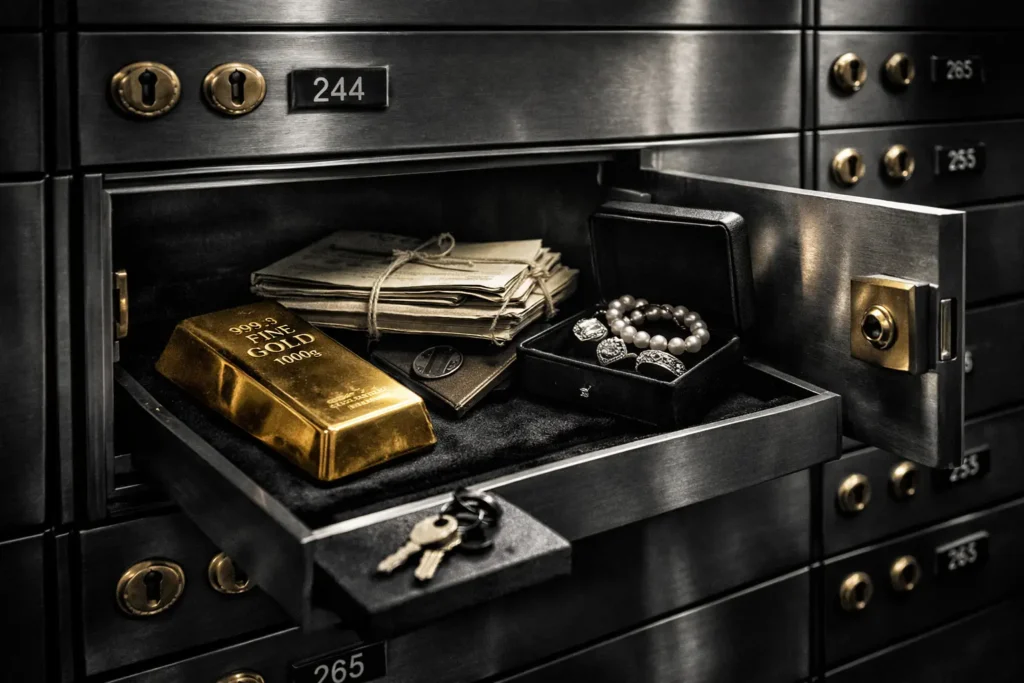
A bank safe-deposit box is an individual safe made available to a client for exclusive use under a rental agreement. It is located in a specially prepared bank area, often in a vault or a room with enhanced resistance to burglary and external factors.
A key feature of bank safe-deposit boxes is their physical and procedural security. This includes not only heavy safe construction, but also alarm systems, monitoring, and strict access rules. As a result, bank safe-deposit boxes provide a level of protection that is difficult to achieve at home.
A safe-deposit box is not an investment product
Contrary to common assumptions, a safe-deposit box is not a financial instrument. It does not generate returns, is not interest-bearing, and is not meant for storing cash for everyday use. Its function is purely protective.
A safe-deposit box is especially useful for storing items whose loss could lead to serious consequences, such as loss of rights, lengthy legal proceedings, or significant financial damage.
How do you rent a bank safe-deposit box?
The rental process itself is relatively simple, although availability of the service can be limited. Not all bank branches offer safe-deposit boxes, and the number of available safes is usually small. For that reason, waiting lists are common in larger cities.
To sign the agreement, you need an ID document and acceptance of the terms and conditions. In many cases, having an account at the bank is not required, although customers using premium offers may have easier access to safe-deposit boxes or better terms.
Confidentiality and rules of use
One of the biggest advantages of a bank safe-deposit box is its high level of confidentiality. The bank does not check or record the contents of the box, and responsibility for the deposited items rests with the client. At the same time, the agreement clearly sets out a list of items that are prohibited.
You cannot place dangerous items, flammable materials, items derived from crime, or anything that may spoil quickly in the box. Violating these rules may result in immediate termination of the agreement.
Access to the box — how does it work?
Access to a bank safe-deposit box is based on a dual-lock system. One part of the mechanism remains with the client, while the other is held by the bank. The box can only be opened with the participation of both sides.
Once opened, the client uses a separate private space, without a bank employee present and without any intrusion into privacy. This solution combines security with full discretion.
What is most often stored in bank safe-deposit boxes?
Bank safe-deposit boxes are used mainly to store documents of major legal importance, valuables, works of art, collectibles, data carriers, and precious metals, including investment gold. For many people, this is a way to protect assets against unforeseen events that cannot be predicted.
How much does a bank safe-deposit box cost, and what determines the price?
The cost of renting a bank safe-deposit box is not fixed and depends on several factors. The size of the box, its location, and the length of the agreement are key. The larger the safe and the longer the rental period, the higher the fee, although banks often offer better pricing for longer contracts.
In practice, bank safe-deposit box prices range from several hundred to several thousand złoty per year. In large cities, especially in central bank branches, costs are usually higher. You should also keep in mind possible extra fees, such as the cost of replacing a lock if a key is lost, or fees for authorizing a proxy.
Bank liability and insurance
Although a bank safe-deposit box is associated with the highest level of security, the bank’s liability for its contents is usually limited. The financial institution is primarily responsible for properly securing the box itself, not for the specific items stored inside it.
In the event of a dispute, it is up to the client to prove exactly what was in the box and what value the deposited items had. For this reason, people storing particularly valuable items often opt for additional insurance, arranged outside the bank.
Does the bank have access to the contents of the box?
A common myth is that the contents of a bank safe-deposit box remain completely inaccessible to third parties in every situation. In reality, the law provides for specific exceptions. Based on a court order or an order from authorized bodies, the bank may be required to make the box available to the relevant services.
This applies, among other things, to criminal proceedings, debt enforcement actions, or measures taken by tax authorities. A bank safe-deposit box is therefore not an effective tool for hiding assets from the state, but only a way to physically secure them.
Limitations worth remembering
Using a bank safe-deposit box comes with certain inconveniences. First of all, access is possible only during branch opening hours, which can be a problem in emergencies. A box is therefore not suitable for storing documents or items that require frequent and immediate access.
An additional limitation is the shrinking availability of safe-deposit boxes in traditional banks. More and more often, this service is treated as part of a premium offer aimed at a select group of customers.
Alternatives to bank safe-deposit boxes
In response to the limited bank offering, private vault companies have entered the market, offering safe rentals outside the banking system. Such solutions can be more flexible, but they require a careful review of the company’s credibility and the level of security provided.
Another option is a home safe. Although modern models offer a high level of protection, they are still more exposed to the effects of burglary or unforeseen events than boxes located in professional vaults.
Is it worth renting a bank safe-deposit box?
A bank safe-deposit box is mainly intended for people who want to secure valuable items for a longer period of time, without needing frequent access to them. Although it involves costs and certain limitations, for many users it remains one of the most trusted forms of asset protection.
The final decision to rent one should be preceded by an analysis of your own needs, the value of the items stored, and the conditions offered by the bank or an alternative service provider.
Lemoon 20.12.2025