




Lowest Spreads and Flexible Terms.




Inflation rises to 4 percent. The impact on the zloty exchange rate and EUR/PLN
Inflation in Poland is again above the NBP target
In August 2026, consumer inflation in Poland stood at 3,4% and was the highest in a year. That means the CPI, or Consumer Price Index, clearly exceeded the NBP target of 2,5% and the upper tolerance band, which ends at 3,5%.
Poland’s Central Statistical Office confirmed the earlier reading. Most economists had expected that result as well. In practice, for people exchanging money, the important point is that higher inflation weakens the purchasing power of the złoty, meaning the same amount buys less than before.
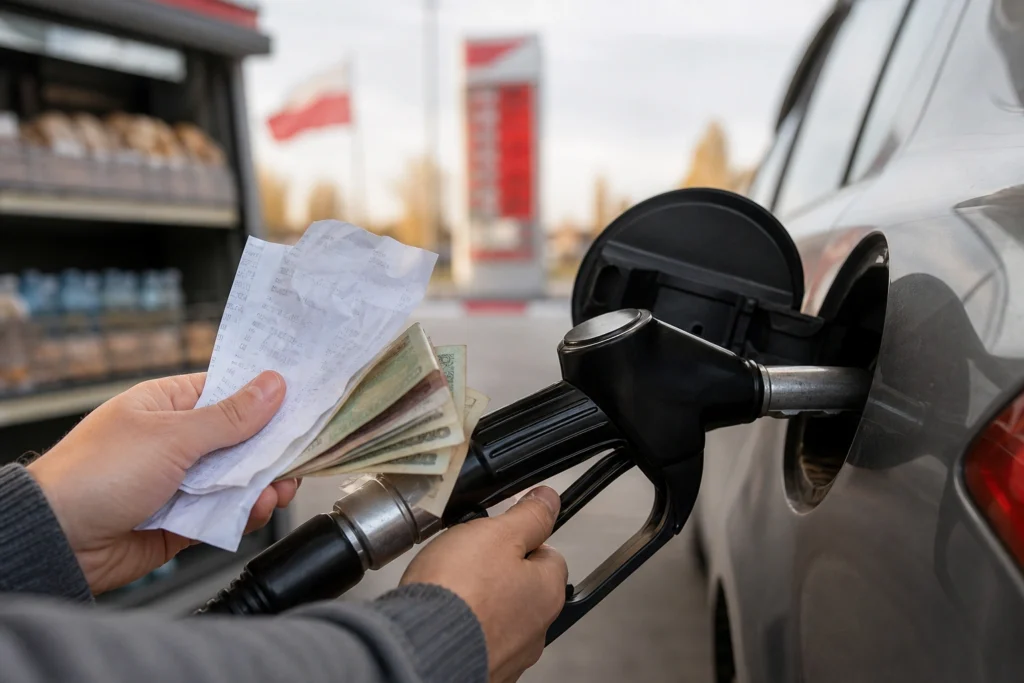
Transport was the biggest driver of higher prices. In this category, prices rose by 11,2% y/y in August. Petrol became 21,8% more expensive, while diesel rose by 31,2%. The data authors point out that in September, the annual pace of price growth for Pb95 petrol accelerated to 36%, and for diesel to 48,5%.
It was not just fuel. Services became more expensive faster than goods, rising by an average of 5,6% y/y, compared with 2,5% for goods. Prices also rose for cigarettes, which were almost 20% higher than a year earlier, as well as for recreation, sport and culture, education and health care.
Housing and utilities costs also added to CPI pressure, rising by 4,6% y/y, while information and communication were up by an average of 3,7%. On the other hand, inflation was held back by declines in food and non-alcoholic beverages, clothing and footwear, and consumer electronics and household appliances.
Since the start of 2026, CPI in Poland has already risen by 3,0%. That is important, because there are still four months left in the year. For the whole of 2025, inflation came in at 3,6%, compared with 11,4% in 2023, 14,4% in 2022 and 5,1% in 2021. The average inflation rate over the past 5 years reached 7,34%, over 10 years it was 4,81%, and over 20 years it was 3,43%.
Sources