




Lowest Spreads and Flexible Terms.




The złoty is weaker because of politics and finances. Euro exchange rate forecast revised
Poland under investors’ microscope. The zloty weakens as markets watch the deficit and elections
Raiffeisen Bank International’s chief economist for Poland, Dorota Strauch, says that the political situation and deteriorating fiscal prospects are drawing increasing attention from foreign investors. In her view, that is one reason the zloty has recently been more sensitive to global risk-off episodes, or periods when investors pull back from risk on world markets.
Strauch notes that warning signs appeared already last year, when rating agencies started to lower Poland’s outlook. In September, Moody’s cut the rating itself. As the economist points out, the decision was driven mainly by weaker fiscal prospects, although the agency also pointed to political conditions and limited room for consolidation before the 2027 parliamentary elections.
In talks with foreign clients, Poland is now, as Strauch says, one of the main topics. Investors want to understand what is happening with public finances and what the consequences could be for the economy and markets. At the same time, they are aware that much of the current tension is tied to the approaching election campaign, and therefore also to the question of what fiscal policy will look like after next year’s parliamentary elections.
Against the regional backdrop, Poland is currently faring worse in terms of public finances. The economist points out that in Hungary, after the April election, there has been a stream of positive news, and the new government is targeting a reduction in the deficit from around 7,5 proc. of GDP this year to 4,9 proc. of GDP in 2027. There is also a plan to meet the convergence criteria needed to adopt the euro by 2030.
In Strauch’s view, the shift in Hungary’s outlook is already visible in the market. Yields on Hungarian bonds, which at the start of the year were clearly higher than yields on Polish debt, have fallen significantly. Compared with stable Czechia and Hungary’s improving fiscal outlook, Poland therefore stands out negatively, above all in public finances.
At the same time, Poland’s real economy remains strong. The latest GDP data for the third quarter showed growth of 3,5 proc. y/y, compared with results below 2 proc. in Hungary and Czechia. Poland therefore remains one of the fastest-growing economies in the EU, and the growth outlook for 2026 as a whole, perhaps even at around 3,6 proc., confirms its lead over most of the region.
According to the economist, that gap should persist in 2027 as well. Even if GDP growth slows to around 3 proc., it is expected to remain clearly above Hungary and Czechia, where growth is seen at around 2,4 proc. and 2,2 proc. respectively. The problem is not the real economy, but public finances, which are now the main source of concern for investors and rating agencies.
Strauch also stresses that domestic politics and institutions remain an important area of risk. Rating agencies point, among other things, to the conflict between the president and the government and the limits it may create for economic policymaking. Also significant is the announcement that the central bank governor is to be brought before the State Tribunal. From the market’s point of view, any escalation of such a dispute would be a clearly negative signal.
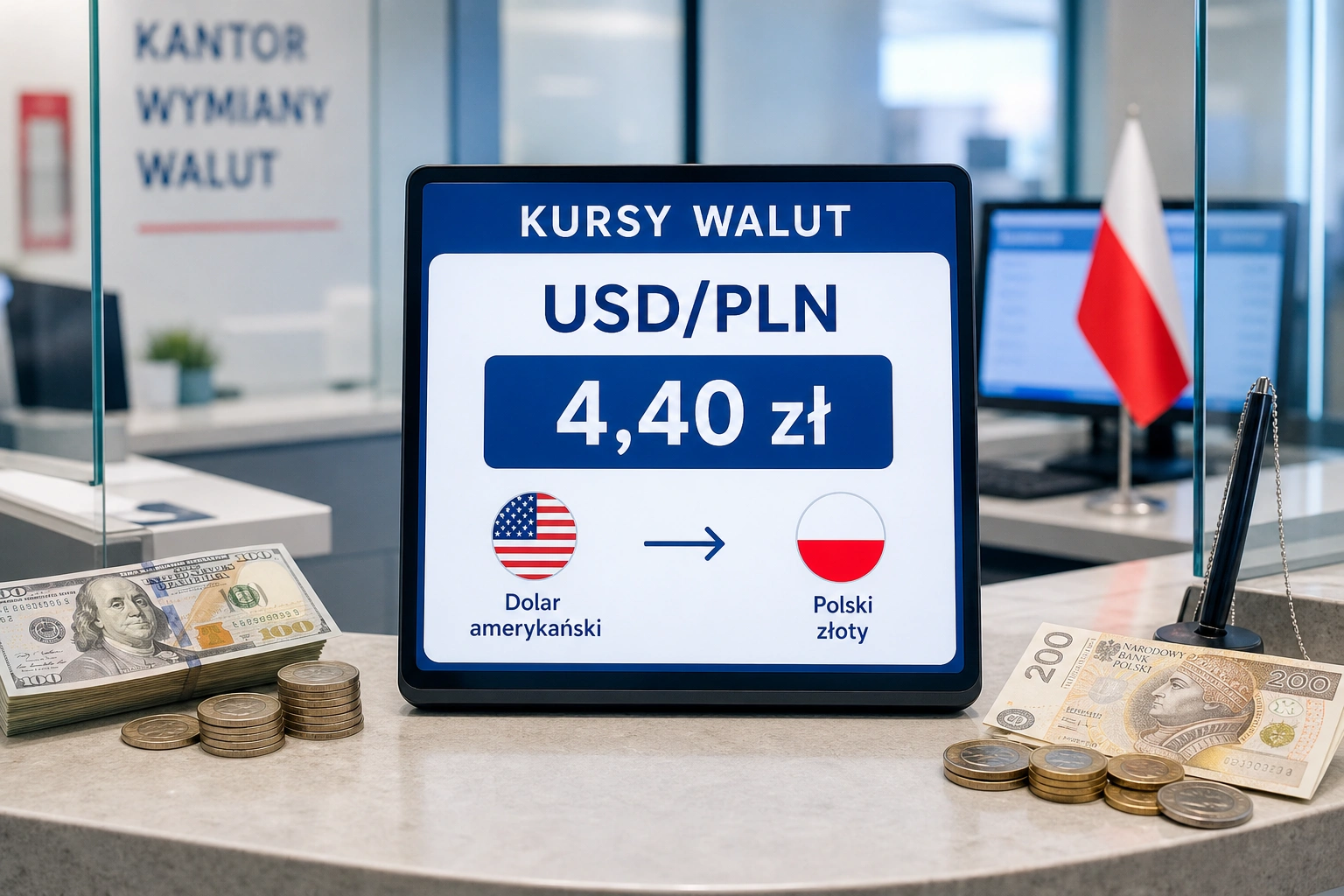
The economist says the zloty currently has little room for sustained gains. In response to the currency’s greater sensitivity to global turbulence, the bank has raised its projected EUR/PLN path for next year. In its base case, it now expects the euro to fluctuate around about 4,40 zł, rather than return closer to 4,30 zł in 2027.
In her view, investors’ changing attitude toward fiscal policy is also having a growing impact on how Poland is perceived. During the pandemic and the energy crisis, high deficits were more easily accepted because the priority was to contain successive shocks. Today, markets are looking much more closely at the state of public finances, especially when a high deficit persists despite solid economic growth.
Strauch notes that one positive sign is the possibility that this year’s public-sector deficit may come in below the finance ministry’s earlier estimate and fall under 7 proc. of GDP. However, the next few years remain crucial. In her view, Poland does not currently have as clear and fast a fiscal consolidation path as Hungary, where part of this year’s increase in the deficit is one-off and tied to the election cycle.
In the short term, rating agencies may therefore wait for more data on the political and fiscal situation. September’s downgrade by Moody’s and S&P’s November decision to change the rating outlook to negative were not a major surprise for the market. Over the longer term, however, Strauch says waiting for elections will not be enough. What is needed is a credible and specific fiscal consolidation plan showing how Poland intends to gradually bring the deficit down.
Sources